May 1, 2026
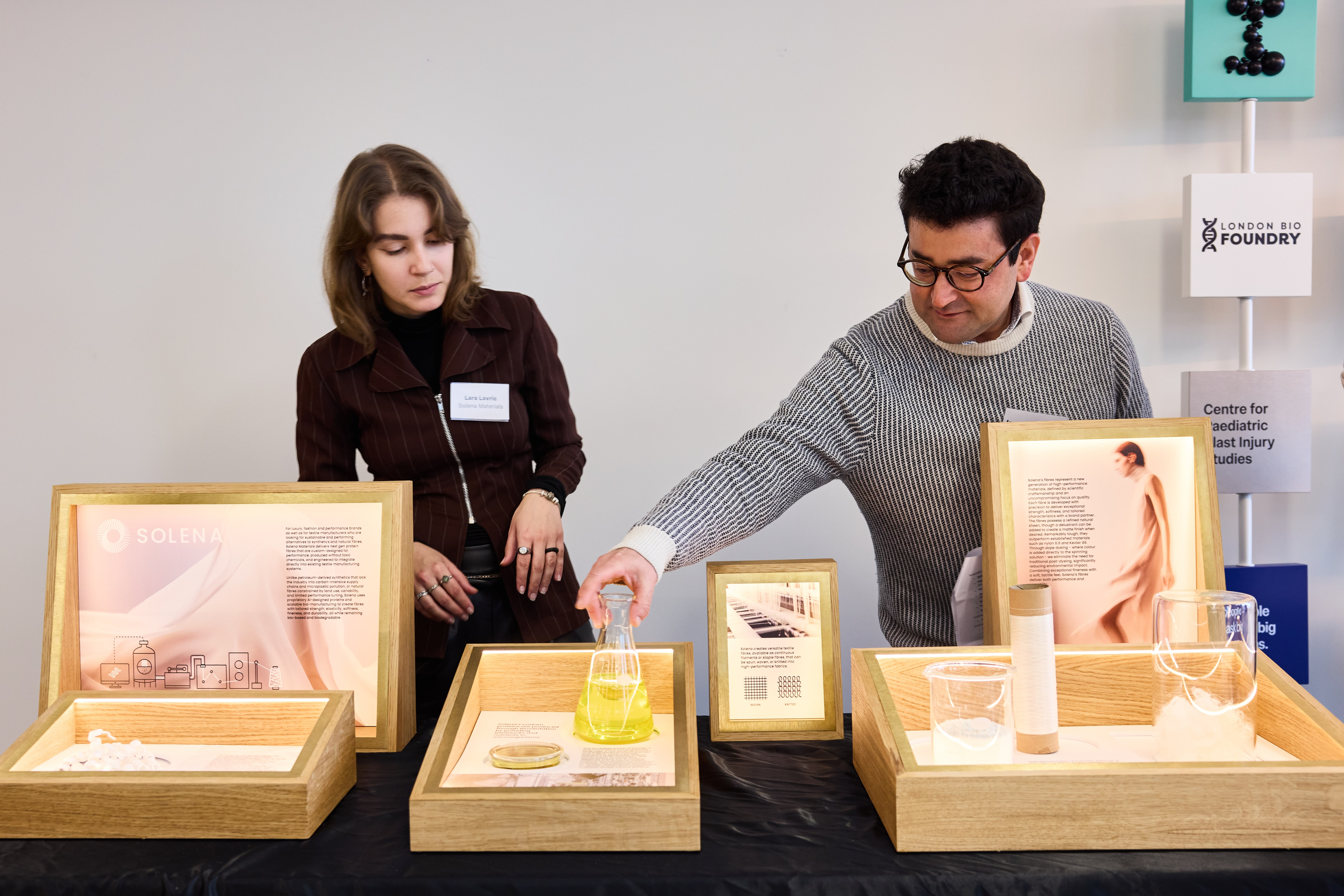
Solena Materials took part in a press briefing at Imperial College London’s I-HUB, joining a showcase of fashion innovation startups emerging from the university and working across advanced materials, dyes, and fibres.
The showcase highlighted the growing strength of the UK’s sustainable fashion ecosystem, as research-driven innovation continues to move into early-stage commercialisation. For Solena, the event marked a return to where the company was first established – and a measure of how far it has come since.
Scaling Innovation
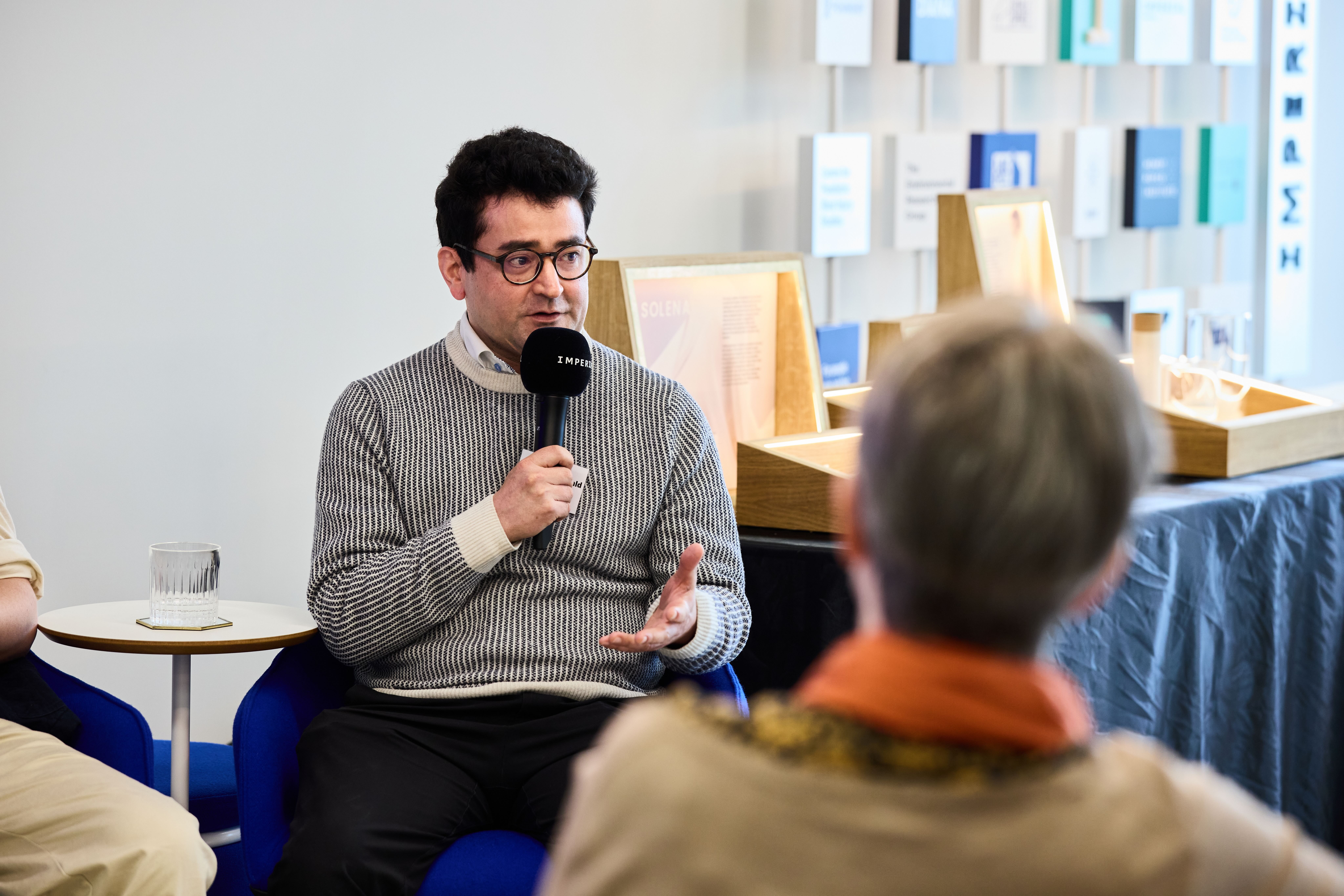
Solena’s CEO, James MacDonald, joined a panel discussion hosted by Mary Ryan, alongside designer Genaro Rivas, start-up operator Irene Maffini, and Ponda founder Julian Ellis-Brown, to examine the realities of bringing advanced materials to market. The conversation focused on one of the core challenges facing the sector: the gap between scientific progress and commercial readiness, and what it actually takes to bridge it.
The discussion identified economic constraints as one of the most significant barriers. The capital required to develop and manufacture at scale is substantial, and financial returns are often too distant to attract conventional investment, leaving many companies dependent on grant funding and specialist investors to reach the critical stages of growth.
Regulation was also discussed as an increasingly important factor in commercialisation: when well-designed, it can help level the playing field by setting consistent environmental and performance standards, creating conditions where more responsible materials can compete with conventional ones on equal terms.
Sector Momentum
Irene Maffini offered a sharp framework for understanding where the industry currently stands, noting that sustainable fashion innovation often follows a familiar cleantech trajectory – it moves from early optimism through a period of disillusionment before reaching meaningful breakthroughs. This pattern is increasingly visible across the UK materials sector, where many companies are navigating the difficult middle stage in which promising technology must translate into commercial viability and industrial adoption.
Reflecting on Solena’s approach within this landscape, James MacDonald commented:
“At Solena, we’re using AI to design entirely new textile fibres – materials that outperform existing options while being manufacturable from non-petroleum feedstocks. Solena exists to restart fibre innovation after decades of stagnation and to give the textile industry a material platform that can finally compete with incumbents on performance, scalability and impact.”
The event concluded with a shared sense that the sector is gaining traction, particularly through the redevelopment of domestic textile manufacturing in the UK and a gradual shift toward production models built for longevity rather than speed.
That shift was reflected in the cohort assembled for the showcase, including Solena Materials, Brilliant Dyes, DyeRecycle, Epoch Biodesign, Fibe, Incador, Petit Pli, Ponda, PulpaTronics, Radiant Matter, and Sequinova.